Editorial channel / Sustainability
Sustainability
Sustainability in textiles and fashion: circularity, LCA, and green manufacturing.
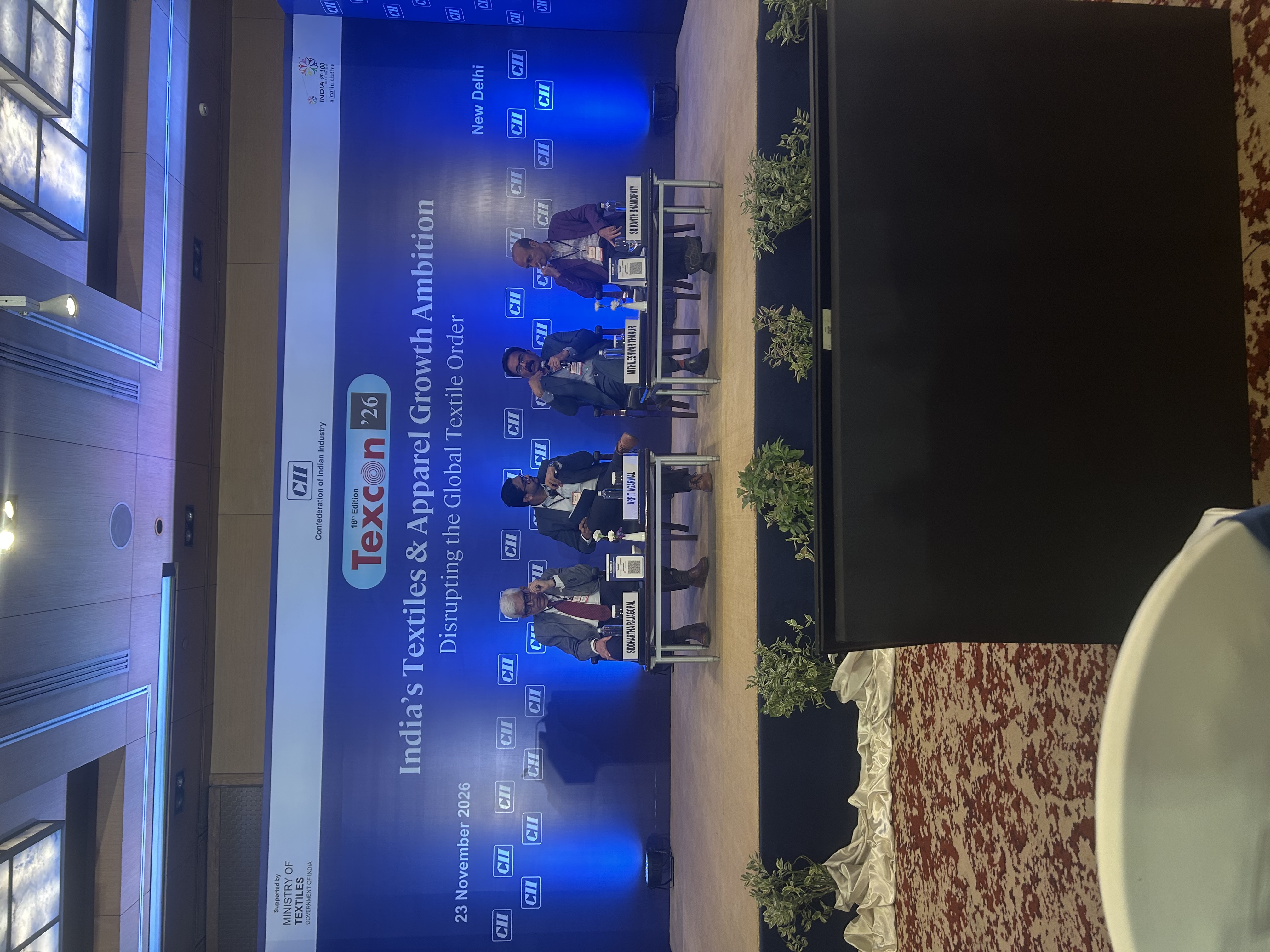
Integrating the Textile Value Chain: Inclusive Growth, Competitiveness & Sustainability
At CII Texcon 2026, panellists emphasised integrated textile value chains, PM MITRA parks, grassroots participation, MSME empowerment, value addition and processing capabilities. They called for policy stability, a predictable fibre policy, faster execution and stronger sustainability commitments to enhance India's global competitiveness and inclusive textile industry growth.
Read the feature ↗Latest in Sustainability
38 publishedBuilding a Skilled Workforce for a Sustainable Textile Future
Dr. Shraddha Mishra, CEO, Textile Sector Skill Council, highlighted the importance of industry-driven, competency-based training in strengthening India's textile workforce. Emphasising practical skills across the value chain, she underscored the need for future-ready talent to accelerate sustainable manufacturing, circularity, recycling and global competitiveness.
For startups with a clear social or environmental mission aligned with the UN SDGs
Social Business Earth’s Open Call 2026 invites early-stage social enterprises and impact-driven startups aligned with UN SDGs to scale their impact through mentoring, business development and investor connections. Five finalists will share CHF 20,000 in prizes and gain an opportunity to pitch in Lugano, Switzerland, in May 2027. Applications close 15 January 2027.
UL Solutions Buys the Platform It Already Works On
UL Solutions’ proposed $350 million acquisition of Worldly, the exclusive Higg Index platform serving 40,000 facilities and 300+ brands, raises an important sustainability governance question: verification independence. As platform ownership and verification services converge, transparency, data access, verifier choice and impartiality will become critical to maintaining trust across global textile supply chains.
EU Customs Reforms 2026: Sustainability, Digital Traceability and the New Rules of Textile Trade
TEXPROCIL’s webinar on New EU Customs Rules 2026 highlighted the growing importance of digital traceability, supply-chain transparency, origin verification and regulatory compliance. Moderated by Dr. Siddhartha Rajagopal, with insights from Sudhakar Kasture, the session underscored sustainability readiness and technology adoption as critical to strengthening India's textile export competitiveness.
CII's TEXCON'26: Scaling Sustainable Textiles for Global Advantage
Industry CEOs will chart India’s 2036 Textiles & Apparel roadmap, leveraging sustainability, circularity, and supply-chain traceability as key commercial advantages. Leaders will define strategic investments in green manufacturing, AI-driven efficiency, and global partnerships to establish India as a trusted, sustainable global manufacturing hub.
India ITME 2026: Accelerating Sustainable Transformation Through Technology, Innovation and Global Collaboration
India ITME 2026 will serve as a global platform connecting textile technology, innovation and sustainable industrial growth. Beyond machinery displays, the exhibition will foster international partnerships, B2B engagements and knowledge exchange, while promoting resource efficiency, circularity, skill development and India’s global competitiveness in the evolving textile ecosystem.
EU Drops the Green Claims Law. Indian Exporters Shouldn’t Exhale Yet
Despite withdrawing the Green Claims Directive, the EU’s Empowering Consumers Directive still bans unverified sustainability claims. Without a single rulebook, brands will push fragmented questionnaires and audit demands onto MSME factories. Exporters with verified energy, water, and chemical data in one standardized file will effortlessly win buyer trust.
Call for Applications: Greenovator Incubation Foundation (GIF)
Greenovator Incubation Foundation (NIT Srinagar) invites applications for Cohort 4.0 under the DST-iTBI Ignition Grant. Receive up to ₹10 Lakhs in prototype support, mentorship, lab access, and networking for tech and green innovations. Apply by November 17, 2026.
India’s Textile Industry: Weaving Sustainability into Europe’s Future
Sustainability is no longer just about meeting market expectations; it is about creating lasting value for people, the planet and the textile industry. Sources & References: European Commission – EU Strategy for Sustainable and Circular Textiles; Ecodesign for Sustainable Products Regulation (ESPR); Digital Product Passport framework; Ministry of Textiles, Government of India.
From Textile Waste to Livelihood: Building a Circular Economy Through Social Innovation
The webinar commenced with a welcome address by Dr. R.A. Lal, Chairman, NISTI, followed by an introduction of the speaker by Prof. Nien Siao. Intro Ms. Bhavini Parikh, Founder of Bunko Junko and Circular OS Private Limited, shared her 34 years of experience in the textile and fashion industry. She highlighted how textile waste can be transformed into valuable products while creating sustainable livelihood opportunities, particularly for women.
Tex-Eco Initiative: Greening India’s Textile Supply Chain for Global Competitiveness
The Tex-Eco Initiative, announced in Union Budget 2026-27, backs textile recycling, recycled fibres and waste management to green India’s textile supply chain. It targets alignment with global environmental standards and competitiveness, but execution, MSME financing and targeted SME support will ultimately determine whether it delivers.
UNEP at NIFT Webinar: Driving Circularity & Lifecycle Policy in Textiles
At the NIFT webinar, UNEP’s Archana Datta urged textiles to adopt a lifecycle approach, tackling microfibres, chemical pollution, and overconsumption. Achieving circularity requires eco-design, cohesive policies like Digital Product Passports, standardized data, and MSME cluster collaboration, ahead of UNEP’s Global Dialogue at Bharat Tex 2027.
India-EU FTA: Zero Duty Opens the Door, EU Green Rules Decide Who Walks Through
Following the India-EU FTA agreement, EU duties on Indian textiles will drop to zero by 2027. However, with strict EU regulations on product destruction, Digital Product Passports, and EPR, Indian exporters need data transparency and readiness to convert tariff cuts into sustained orders.
NIFT: Bridging Policy and Practice – Sustainable Fashion Across BRICS and Beyond
Event Spotlight: Sustainable Fashion Across BRICS and Beyond The National Institute of Fashion Technology (NIFT), New Delhi, hosted an executive panel discussion focused on bridging the gap between policy frameworks and industrial execution. Bringing together leaders from multilateral agencies, government bodies, and manufacturing hubs, the session explored actionable strategies for driving sustainable fashion and compliance across BRICS nations and global export markets.
Living Income: Placing Farmers at the Heart of Sustainable Value Chains
The SUTRA 2026 panel highlighted how the Triple Bottom Line – People, Planet and Profit – can drive sustainable value chains. Better farm practices, value addition, women’s participation, digital technology and market access are essential to improving farmers’ living incomes while strengthening economic and environmental sustainability.
Regenerative Cotton and Responsible Sourcing: Building Sustainable Value Chains from Farm to Fashion
At SUTRA 2026, Salil Chawla (DFU Publications) interviewed IDH's Jagjeet Singh Kandal on textile sustainability. Kandal highlighted regenerative cotton, factory safety, and textile circularity as key trade prerequisites, stressing that shared economic value across the value chain is essential for India's global market competitiveness.
InnoQualTex SourceXhibition 2026
Regulatory & Compliance Focus Panel Discussion V addressed OEKO-TEX® outreach across EU and Indian markets. Leadership from Hohenstein, the OEKO-TEX® Association, GIZ, and Sorbe Biotechnology clarified upcoming regulatory frameworks, outlining critical compliance protocols, industry standards, and future growth opportunities for textile manufacturers.
Advancing Sustainability Through Responsible Chemical Innovation
At InnoQualTex Source Exhibition, Salil Chawla, Director, DFU Publications, interacted with Deepak Kumar, Senior Manager – Business Development, N9 World Technologies, who highlighted the company’s sustainability commitments, EcoVadis Silver recognition, Higg Index credentials, ZDHC compliance initiatives and USDA-approved bio-based products, advancing responsible chemical solutions for textiles.
SUTRA Summit 2026
India is positioning itself at the center of global supply chains to define responsible sourcing as competitive, inclusive, resilient, and trusted. The SUTRA Summit 2026 brings together partnerships, innovations, and investments to transform future supply chains—moving beyond compliance toward measurable trust, farmer equity, and climate resilience.
Sustainability: A Strategic Angle in India’s Apparel Export Growth
At the TexPort workshop, Joint Secretary Ms. Alaknanda Dayal emphasized strengthening India’s apparel export ecosystem and global competitiveness. She highlighted capacity building, cluster support, and aligning production with international sustainability standards, resource efficiency, and supply-chain transparency to build a competitive, responsible, and globally connected industry.
Sustainability: A Strategic Imperative for India’s Apparel Export Growth
At the TexPort workshop on “How to Start, Sustain and Scale Apparel Exports,” Mithieshwar Thakur, SG, AEPC, highlighted India’s apparel export opportunities, emphasising market diversification, quality enhancement, MMF capabilities and district-level export development. Covered by Salil Chawla, Director, DFU Publications.
TexPort: Sustainability and Competitiveness Key to Scaling India’s Apparel Exports
At the TexPort workshop on “How to Start, Sustain and Scale Apparel Exports,” Bipin Menon, Trade Advisor, Ministry of Textiles, stressed the importance of strengthening India’s apparel export ecosystem through product diversification, quality enhancement, market expansion and district-level initiatives.
LIVA’s ‘Tag Check Kiya Kya?’ campaign urges consumers to check the fabric tag before they buy
The campaign highlights the importance of checking fabric labels to make informed fashion choices, reinforcing LIVA’s focus on transparency, fabric authenticity and conscious consumer awareness.
Theme: Net-Zero Buildings & Sustainable Construction
The built environment contributes nearly 37% of global energy-related carbon emissions from construction and building operations. In 2026, sustainable construction is moving beyond energy efficiency towards net-zero and regenerative buildings that cut emissions, strengthen climate resilience, improve occupant wellbeing, and reduce operational costs, supporting global climate goals.
From Claims to Proof: Tackling Greenwashing in Textiles
At the 5th Sustainable Textiles Summit 2026, Shivendra Parmar of TÜV Rheinland highlighted, as covered by Salil Chawla, Director, DFU Publications, the urgent need for textile exporters to substantiate sustainability claims through credible evidence, traceability, technical documentation and reliable verification to combat greenwashing and meet evolving EU regulations.
Better Cotton Has Changed Its Label. The Proof Comes Later.
Better Cotton’s regenerative standards are advancing faster than the evidence, with brand reporting starting only in 2028. India’s H&M project highlights the challenge: just 1,764 of 12,000+ farmers received first-year incentives. As EU green-claims rules tighten, farm-level traceability and verifiable records—not labels alone—will determine credible regenerative cotton claims.
Key Takeaways: 5th Sustainable Textiles Summit 2026
At the 5th Sustainable Textiles Summit 2026, organised by the PHD Chamber of Commerce and Industry (PHDCCI), Dr Pankaj Kumar, National Project Coordinator, UNIDO, highlighted the need to bridge the gap between sustainability policies and practical implementation across India’s textile industry. In his address, he emphasised technology innovation, green manufacturing, resource and water conservation, energy efficiency, circular economy models, and the reduction of hazardous chemicals.
Prioritizing the Human Element and Decent Work in India’s Textile Supply Chain
At the 5th Sustainable Textiles Summit 2026, hosted by the PHD Chamber of Commerce and Industry (PHDCCI), Dr. Pankaj Kumar, National Project Coordinator at UNIDO, emphasized the necessity of giving India’s textile supply chain a human face. Moving beyond technical metrics and policy frameworks, he highlighted that true sustainability must start at the grassroots level—with smallholder cotton farmers and textile workers.
Financial architecture in accelerating sustainability across India’s textile industry.
At the 5th Sustainable Textiles Summit 2026, organised by PHDCCI, Tanmeet Thukral, Private Sector Specialist at The World Bank Group, highlighted the importance of financial architecture in advancing sustainability across India’s textile industry. In key takeaways captured by Salil Chawla, Director, DFU Publications, Thukral emphasised that despite growing access to technology and innovative solutions, appropriate financing remains a key barrier to their adoption.
Sustainability Must Become a Competitive Advantage for India’s Textile Industry: Archana Datta
On the sidelines of the 5th Sustainable Textiles Summit 2026, organised by the PHD Chamber of Commerce and Industry (PHDCCI), Salil Chawla, Director, DFU Publications, engaged in an insightful dialogue with Archana Datta, Associate Programme Management Officer at the Life Cycle Initiative, on India’s textile industry preparedness for the evolving global sustainability landscape. Discussing the challenges and opportunities facing India’s T&A sector, Archana Datta highlighted the role of MSMEs.
Strategic Dialogue on Sustainable Textile Transformations
On the occasion of the 5th Sustainable Textiles Summit 2026, organized by the PHD Chamber of Commerce & Industry (PHDCCI), Murugan Thenkondar, President – Cellulose Fibres at Grasim Industries Limited, addressed the august gathering. In key takeaways captured by Salil Chawla, Director of DFU Publications, the address underscored how sustainability has evolved from a simple regulatory requirement into a core strategic driver for global textile manufacturing and brand compliance.
Sustainability in Textiles: Is India Ready to Seize the EU Opportunity?
On the sidelines of the 5th Sustainable Textiles Summit 2026, organised by PHDCCI, Salil Chawla, Director, DFU Publications, engaged in an insightful dialogue with Anil Jadhav Ji of Ecocert on India’s textile sustainability preparedness. With the India–EU FTA presenting a significant opportunity for Indian textile exports, the question is whether our MSME-driven industry can overcome resource constraints, strengthen sustainability practices and meet evolving international compliance requirement
Sustainable Innovation: Filatex’s Breakthrough T2T Recycling Technology
On the sidelines of the 5th Sustainable Textiles Summit 2026, organized by the PHD Chamber of Commerce & Industry (PHDCCI), Salil Chawla (Director, DFU Publications) engaged in an insightful dialogue with Madhu Sudhan Bhageria (Chairman & Managing Director, Filatex India Ltd.). The conversation explored global macroeconomic shifts, policy bottlenecks in India’s synthetic fiber segment, and Filatex’s pioneering strides in textile-to-textile (T2T) recycling.
India’s Textile MSMEs: Turning Sustainability into an Export Opportunity
On the sidelines of the 5th Sustainable Textiles Summit 2026, organised by PHDCCI, Salil Chawla, Director, DFU Publications, engaged in an insightful dialogue with Gopal Bushal, Director, Ministry of Textiles, Government of India, on India’s preparedness to leverage the India–EU FTA and meet evolving sustainability requirements. Gopal Bushal highlighted the need for targeted policy support, financial assistance, technology adoption and hand-holding for MSMEs to bridge sustainability gaps.
Sustainability Is No Longer a Choice, but a Business Imperative for the Textile Industry
Exclusive Interaction: Salil Chawla in Conversation with Dr. Swapna Mishra, CEO, Textile Sector Skill Council On the sidelines of the 5th Sustainable Textiles Summit 2026, organised by the PHD Chamber of Commerce and Industry (PHDCCI), Salil Chawla, Director, DFU Publications, engaged in an insightful dialogue with Dr. Swapna Mishra, CEO of the Textile Sector Skill Council (TSC), on sustainability, skill development & the preparedness of India’s textile industry for emerging global regulations.
Life Cycle Assessment for Textile Factories: Where to Start
LCA sounds like an enterprise-only exercise, but even a screening-level assessment delivers real value. A starter roadmap for manufacturers.
Extended Producer Responsibility for Textiles: What Exporters Need to Know
EPR schemes for textiles are spreading across major markets. How they work, who pays, and how they reach exporters through brand requirements.