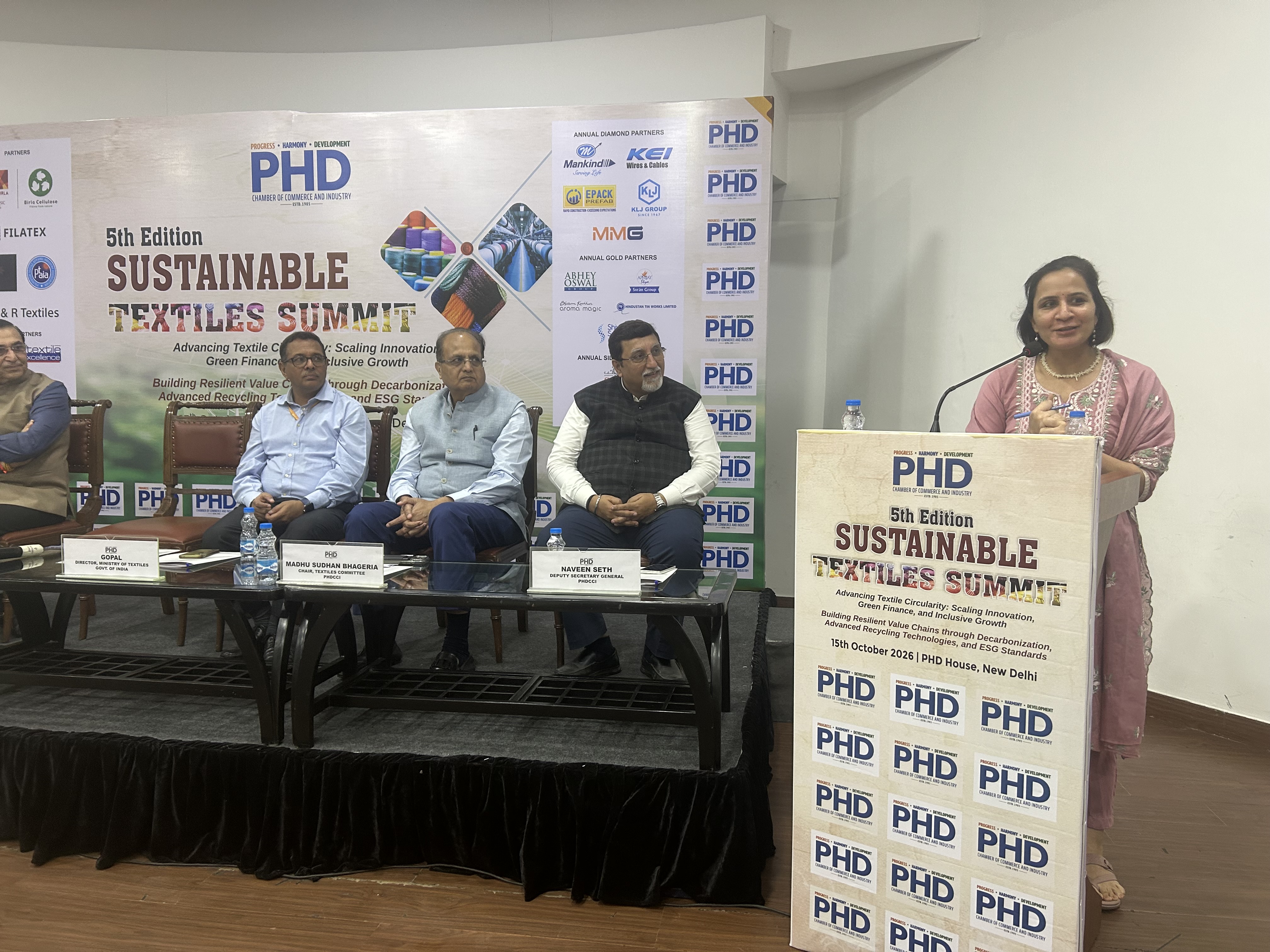
Acknowledging the constraints faced by MSMEs in terms of financial resources, operational capacity and technical bandwidth, she emphasised that sustainability must increasingly be viewed as a competitive advantage rather than merely a compliance requirement.
With global regulations evolving and demand for sustainable manufacturing gaining momentum, Indian textile businesses need to adopt resource-efficient processes and responsible production practices. Such a transition is essential not only to meet emerging market requirements and secure new business opportunities but also to ensure long-term business resilience amid growing resource constraints.
Archana Datta also observed a growing interest among MSMEs in understanding their manufacturing processes, improving operational practices and preparing for upcoming sustainability-related compliance requirements.
Addressing India’s broader sustainability ambitions, including initiatives such as Bharat Tex, she expressed confidence that the country possesses the essential ingredients for progress—from policy-level direction and proactive industry participation to increasing sustainability awareness across MSME supply chains.
However, she underlined that the way forward lies in greater collaboration, coordinated action and knowledge-sharing among policymakers, large manufacturers, MSMEs, brands and sustainability organisations. Sharing information and best practices can help the industry collectively accelerate its transition towards a more sustainable and globally competitive future.
The key takeaway: India has the potential, policy direction and industry interest to strengthen its position in sustainable textiles. The priority now is to translate these strengths into collaborative, practical and scalable action across the entire value chain.
Conversation
Industry notes
No notes yet. Add the first perspective from the industry.