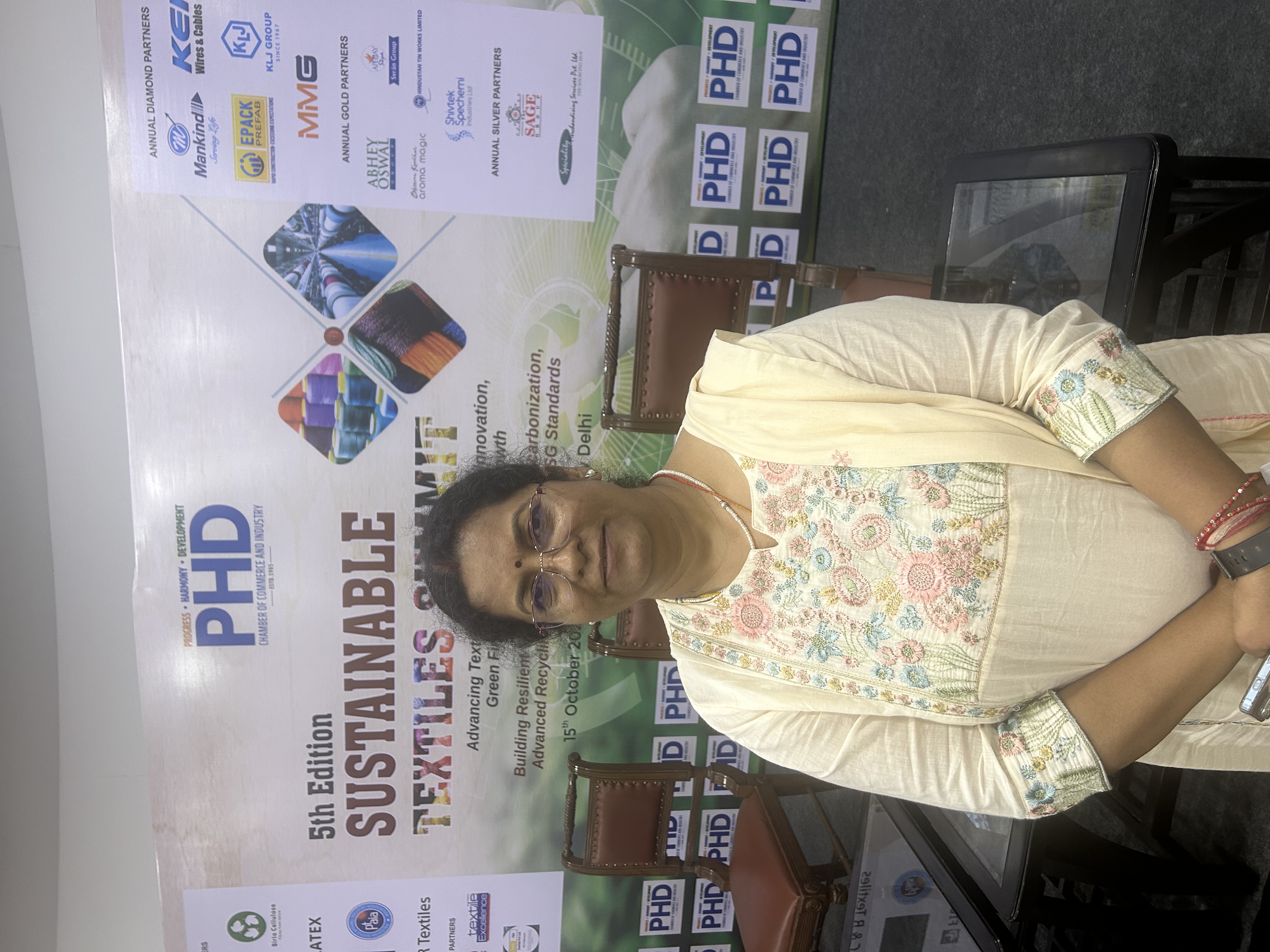
Dr. Mishra emphasised that sustainability is no longer merely a fashionable concept but a business imperative. With increasingly stringent global regulations, particularly in major export markets, textile and apparel businesses must align their operations with sustainable practices to remain competitive and continue accessing international markets.
The Textile Sector Skill Council is playing a pivotal role in building industry-relevant standards, developing skills, and assessing and certifying professionals. The Council has already developed three National Skills Qualifications Framework-aligned standards covering textile waste collection and segregation, textile waste recycling machine operation, and entrepreneurship in textile waste management. It is also working towards developing advanced standards for industry owners, faculty members of educational institutions and graduate students, enabling them to understand emerging sustainability regulations and the competencies required to comply with them.
Addressing the challenge of translating government initiatives into tangible benefits for MSMEs, Dr. Mishra highlighted the various skilling programmes supported by the Ministry of Skill Development and Entrepreneurship, the Ministry of Textiles and other government bodies. These initiatives, including programmes under the RAMP framework, offer training opportunities ranging from short awareness sessions of two to three hours to structured programmes extending over several weeks or months.
She acknowledged that reaching every stakeholder would take time but reiterated that the government is extending support through skill standards, training programmes and funding mechanisms to strengthen industry preparedness.
The discussion also highlighted the growing importance of sustainability in the context of the India–EU Free Trade Agreement (FTA), which presents significant opportunities for Indian textile and apparel exporters. As sustainability and regulatory compliance increasingly influence global trade, Indian businesses must invest in the right capabilities to strengthen their export competitiveness and respond effectively to international market expectations.
Dr Mishra’s message to the industry was clear: “Keep learning. Continuous learning, upskilling and adaptation are essential not only to remain relevant in the evolving job market but also to compete successfully with major textile-exporting nations such as Bangladesh and Vietnam.
She encouraged industry stakeholders, particularly MSMEs, students and professionals, to visit **www. texskill.in and connect with the Textile Sector Skill Council to explore available training programmes and skill-development opportunities.
Conversation
Industry notes
No notes yet. Add the first perspective from the industry.