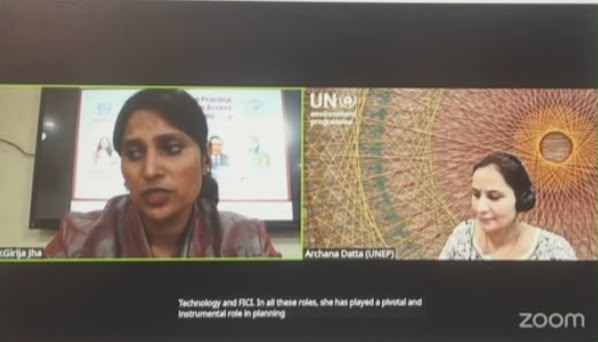
Addressing the NIFT panel on Bridging Policy and Practice, Ms. Archana Datta, Programme Management Officer at UNEP, emphasized that the textile sector must shift from localized facility checks to a holistic lifecycle approach.
Highlighting that textiles account for nearly 9% of annual microfibre pollution alongside substantial water and climate impacts, Datta warned against the accelerating pressures of digital-era overconsumption. UNEP’s value-chain research underlines critical hotspots: wet processing drives hazardous chemical and water pollution, while natural fibre farming and consumer laundering trigger extreme water scarcity.
To bridge systemic gaps, UNEP outlines four key imperatives: Circular Business Models: Expanding closed-loop recycling, product longevity, and eco-design. Cohesive Policy Mix: Combining EU-style regulations (like Digital Product Passports under ESPR) with economic tools like Extended Producer Responsibility (EPR) eco-modulation.
Actionable Data: Standardizing metrics to monitor and benchmark progress. Cluster Collaboration: Scaling initiatives like India’s InTex program in Surat, Karur, and Panipat to exchange best practices among MSMEs. UNEP is also bringing its Global Textile Policy Dialogue to India at Bharat Tex 2027. Reported by Salil Chawla, Director, DFU Publications.
Conversation
Industry notes
No notes yet. Add the first perspective from the industry.