Covered by By Salil Chawla, Director, DFU Publications
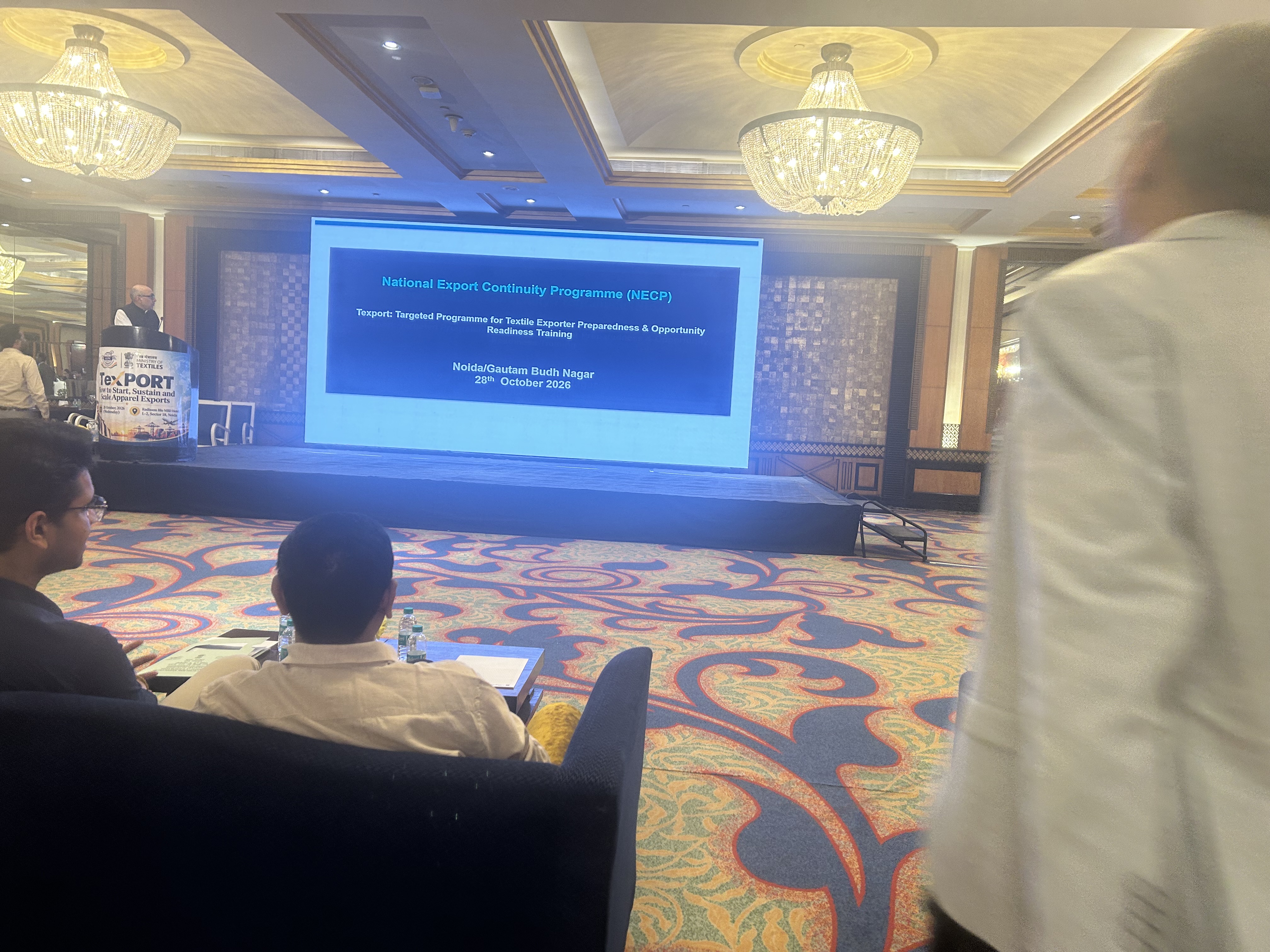
Addressing the TexPort workshop on “How to Start, Sustain and Scale Apparel Exports,” Bipin Menon, Trade Advisor, Ministry of Textiles, highlighted the need to strengthen India’s apparel export ecosystem through product diversification, quality improvement, market expansion and district-level interventions.
He emphasised the potential of man-made fibres (MMF), alongside cotton, to enhance India’s global competitiveness. Expanding exporter participation, improving skills, strengthening testing facilities and facilitating access to international markets were identified as key priorities.
Sustainability emerged as a critical factor for future export growth. Indian textile and apparel manufacturers must increasingly focus on recycling, recycled materials, traceability, environmental compliance and responsible production to meet evolving international market requirements, particularly in Europe.
Menon also highlighted the importance of Free Trade Agreements, export finance, certification support, logistics and industry collaboration. Tailored district-level strategies and digital tools could help new exporters overcome barriers and connect with global buyers.
India’s export ambitions will increasingly depend on combining manufacturing scale with sustainability, innovation and quality.
Conversation
Industry notes
No notes yet. Add the first perspective from the industry.