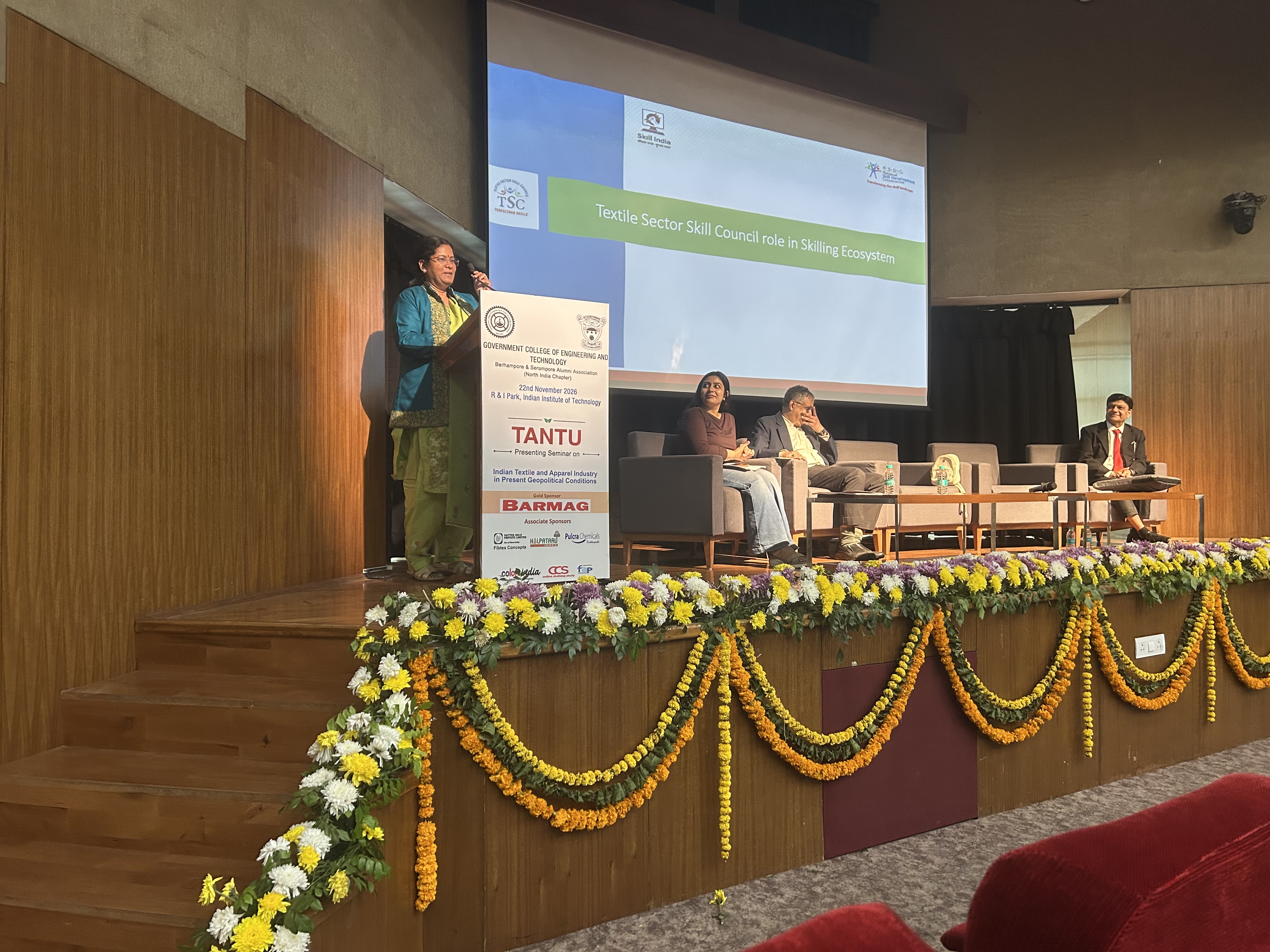
Addressing the TANTU Seminar on “Indian Textile and Apparel Industry in Present Geopolitical Conditions” today at IIT Delhi, New Delhi, Dr. Shraddha Mishra, CEO, Textile Sector Skill Council (TSC), delivered an inspirational and deeply insightful presentation on the critical role of skill development in strengthening India’s textile and apparel ecosystem.
Highlighting the industry’s persistent skill gaps, she emphasised the distinction between academic qualifications and practical competencies required on the factory shop floor. The Textile Sector Skill Council addresses the entire value chain, from fibre to fabric, covering conventional textiles, technical textiles, recycled materials and sustainable, eco-friendly manufacturing.
She explained how industry-driven Qualification Packs and competency-based training programmes equip workers with practical knowledge, technical capabilities and workplace safety skills. With 70–80% emphasis on practical training, the framework aims to ensure that certified individuals possess the competencies genuinely required by industry.
An important dimension of her address was the growing relevance of skills in the sustainability transition. As textile manufacturing moves towards circularity, recycling, resource efficiency, responsible production and advanced materials, developing a workforce capable of implementing these practices becomes imperative.
She also highlighted the collaborative ecosystem involving industry associations, training partners, independent assessment agencies and government institutions in creating standardised qualifications, credible certification and industry-relevant training.
Her message was clear: India’s ambition to become a globally competitive textile manufacturing hub must be supported by a skilled, future-ready workforce equipped to deliver both productivity and sustainability.
Covered by Salil Chawla, Director, DFU Publications.
Conversation
Industry notes
No notes yet. Add the first perspective from the industry.