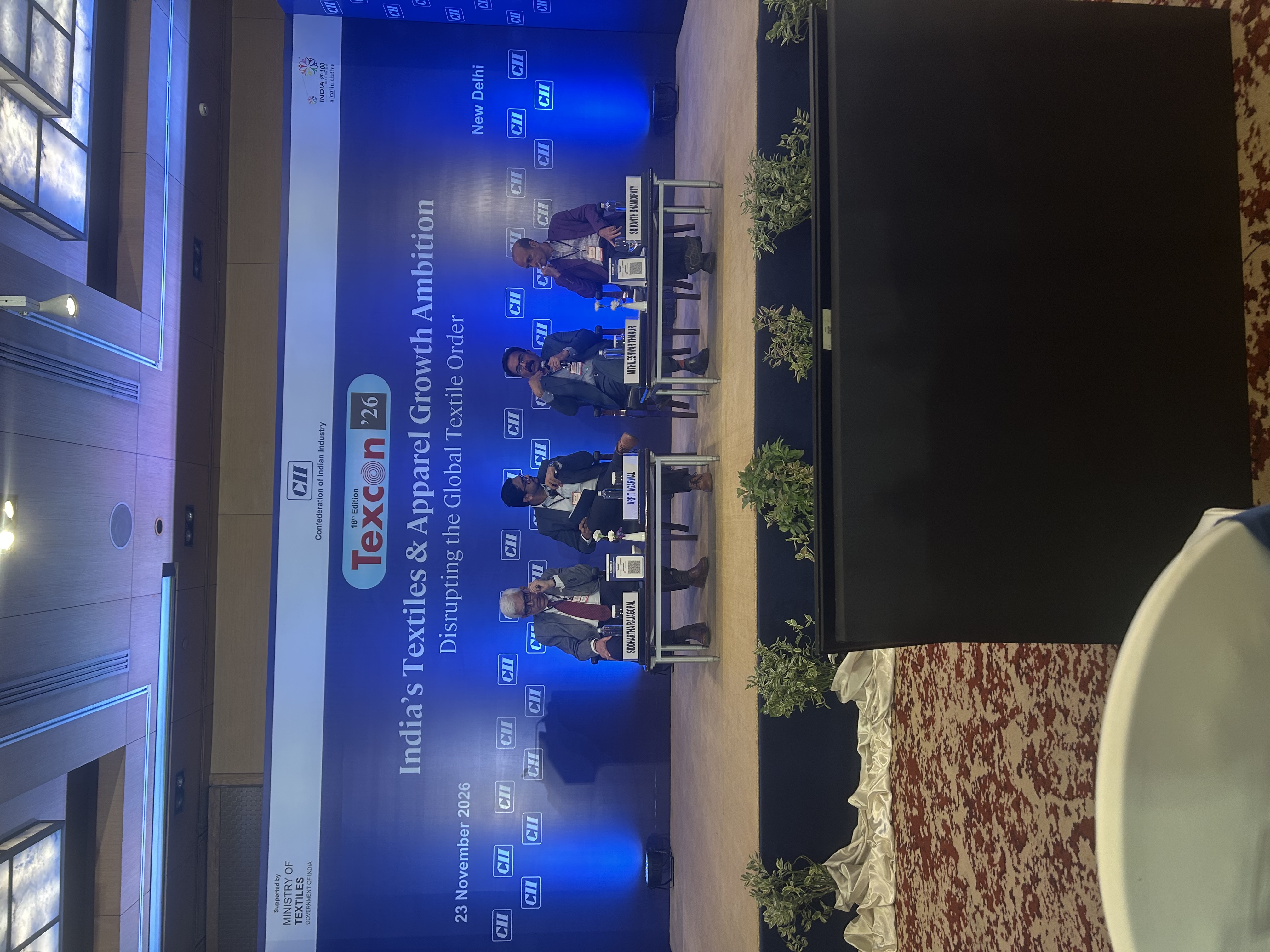
During a thought-provoking panel discussion at CII Texcon 2026, held today at Le Meridien Hotel, New Delhi, panellists highlighted the importance of building an integrated textile manufacturing ecosystem that enables growth not just for large companies, but also for MSMEs and grassroots enterprises.
The discussion underscored the potential of PM MITRA textile parks as manufacturing hubs, connecting spinners, weavers, processors, garment manufacturers, stitching units and ancillary industries into a stronger, more collaborative supply-chain network.
Emphasis was placed on extending opportunities to smaller manufacturers, enabling them to become reliable suppliers, improve capabilities, access markets, strengthen partnerships and gradually move up the value chain. International manufacturing models were also cited as examples of how production hubs can connect seamlessly with global buyers and sourcing networks.
Looking ahead, the panellists identified key priorities for India’s textile industry over the next 3–5 years: speed, certainty and ease of execution; stable and predictable government policies; greater ambition and confidence among industry stakeholders; enhanced value addition; investment in processing capabilities; and a stable fibre policy.
The message was clear: market access is only the beginning. India’s textile industry must strengthen its entire value chain, embrace sustainability, enhance competitiveness and ensure that growth is inclusive, empowering enterprises of all sizes to participate in the global textile economy.
As covered by Salil Chawla, Director, DFU Publications.
Conversation
Industry notes
No notes yet. Add the first perspective from the industry.