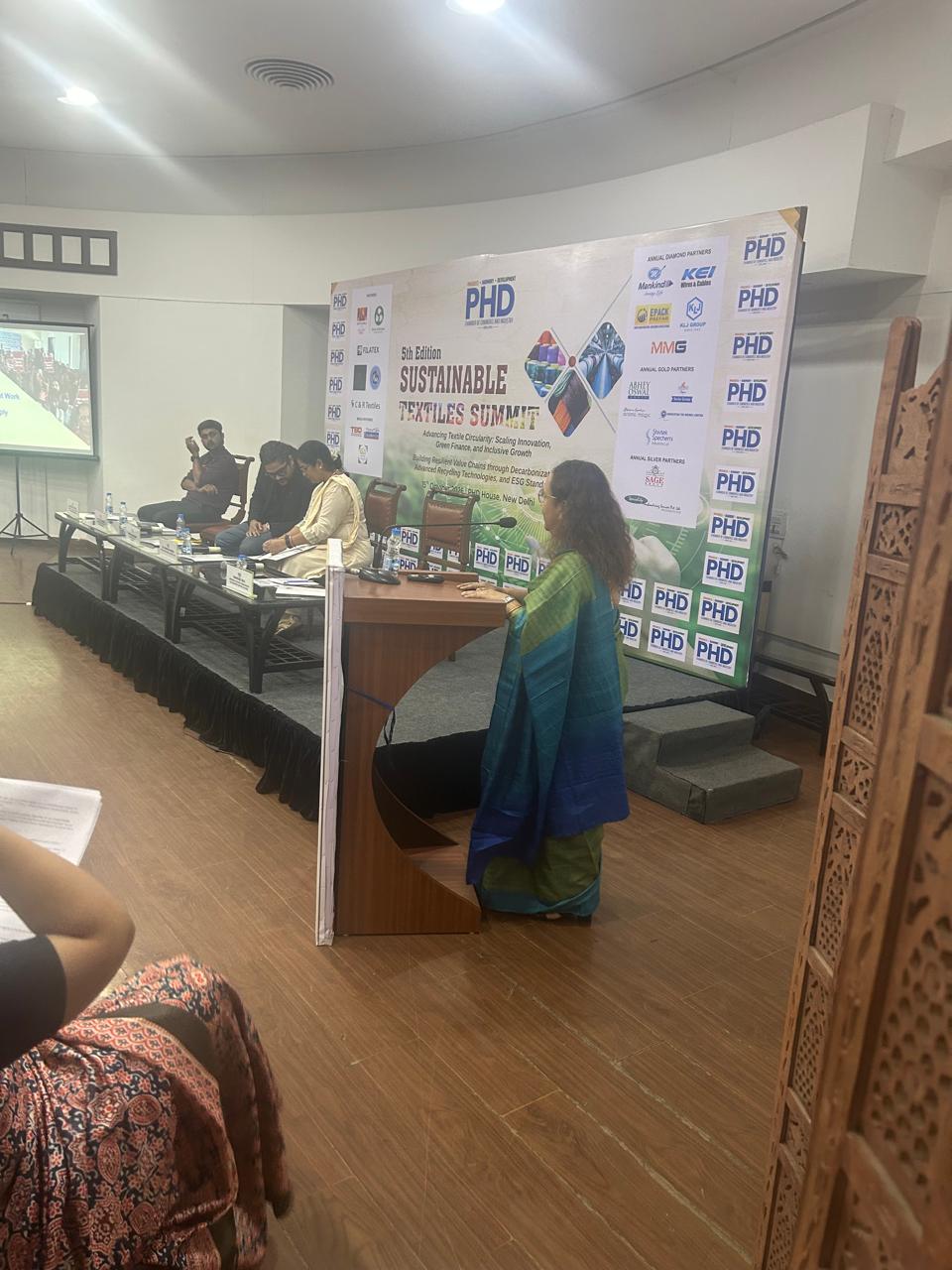
Drawing upon ILO principles, Dr. Kumar stressed that transitioning towards a sustainable textile ecosystem requires incorporating decent work conditions, social protection, and fundamental rights at work. Essential pillars such as eliminating forced and child labor, guaranteeing safe occupational environments, ensuring equal pay for work of equal value, and facilitating social dialogue between employers and workers are non-negotiable for building a fair, resilient, and dignified supply chain.
Key takeaways captured by Salil Chawla, Director, DFU Publications.
Conversation
Industry notes
No notes yet. Add the first perspective from the industry.