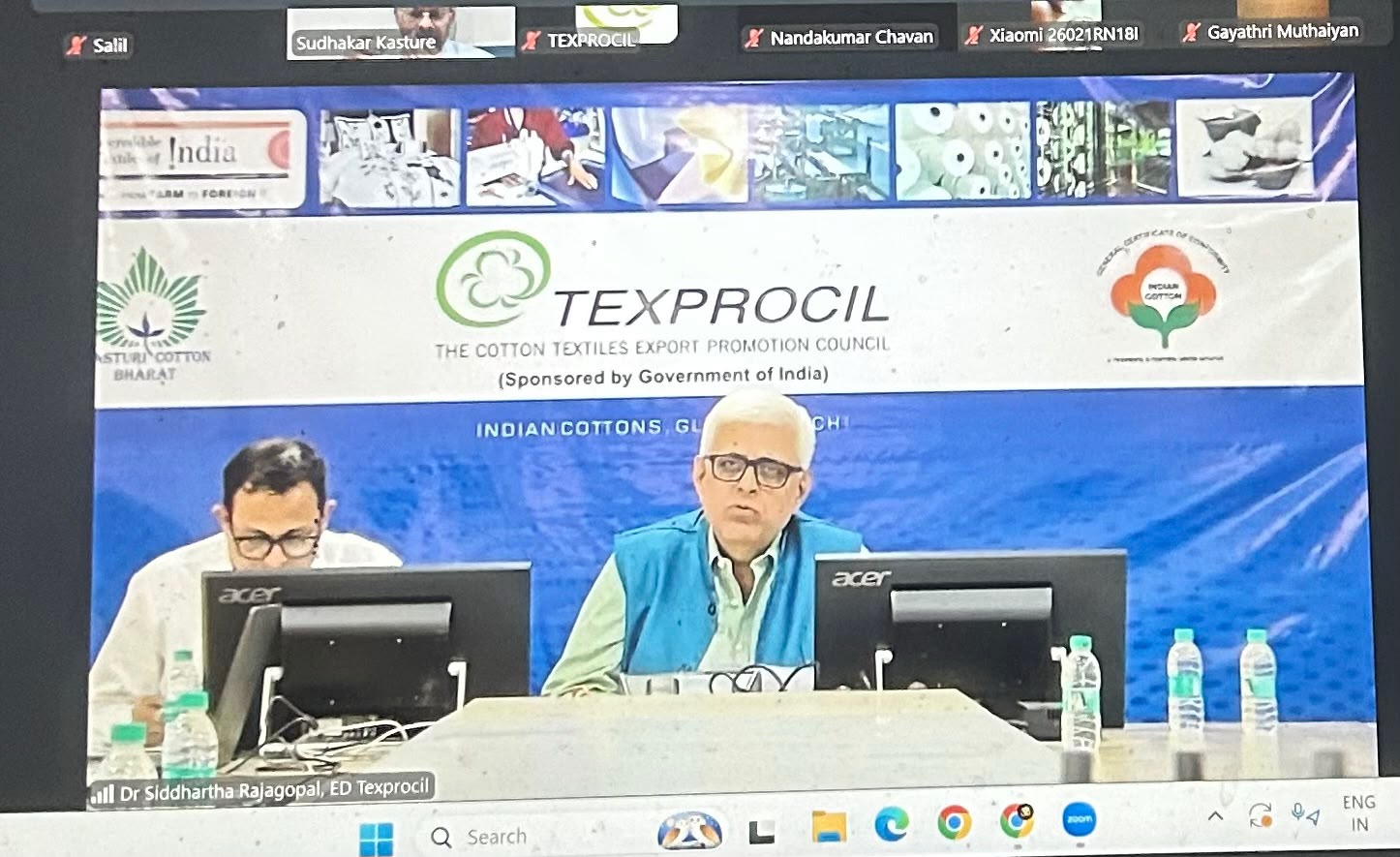
The transition towards sustainable, transparent and digitally accountable global trade was a central theme at today’s informative webinar hosted by TEXPROCIL (The Cotton Textiles Export Promotion Council of India), moderated by Dr. Siddhartha Rajagopal, Executive Director, TEXPROCIL.
In his comprehensive opening address, Dr. Rajagopal outlined the far-reaching implications of the New EU Customs Rules 2026, highlighting how evolving customs procedures, digital governance and enhanced supply-chain accountability will reshape India's textile and apparel exports.
The session featured Mr. Sudhakar Kasture (Kasturi / Exim Institute), who brought practical insights into the changing European trade and regulatory landscape.
Beyond customs duties and tariff structures, the reforms signal a significant shift towards digital product identification, origin verification, real-time traceability and greater importer accountability. For Indian exporters, sustainability readiness, reliable supply-chain documentation and technology-enabled compliance will increasingly determine competitiveness.
With the anticipated India–EU FTA opening new market opportunities, the message is clear: tariff advantages must be matched by sustainability intelligence and compliance preparedness.
Coverage by: Salil Chawla, Director, DFU Publications.
Conversation
Industry notes
No notes yet. Add the first perspective from the industry.